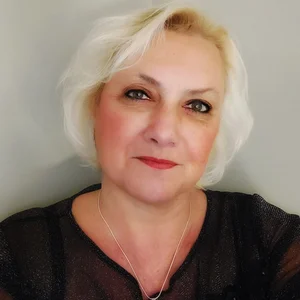
Gordon Hamilton
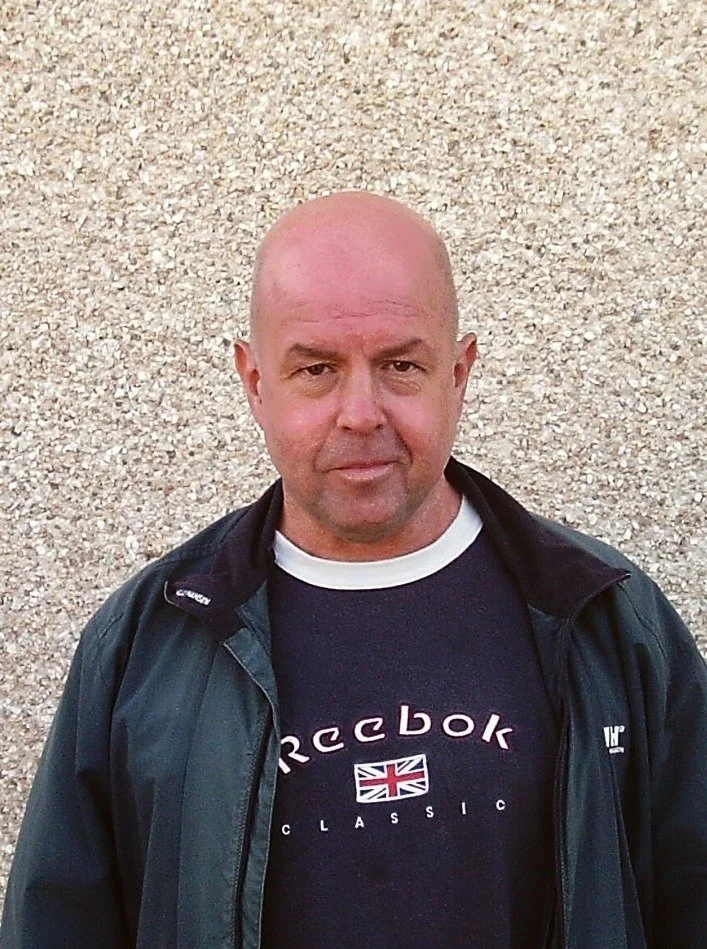
What made you decide to become a writer?
Learning to read, I think. My first memory of producing content was when I was in early primary school and reading the likes of Hardy Boys books. I remember writing my own new adventures for Frank and Joe. In 2007, I started writing online, principally on my passion for food and cooking. I also spent two years working as a freelance travel writer.
How many books have you written and/or published, and which is your favourite?
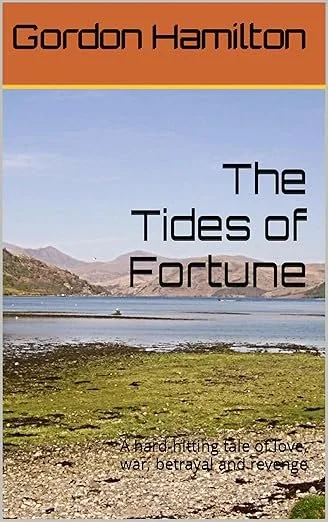
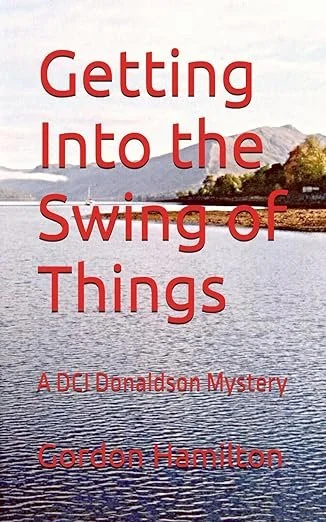
I have written three complete novels. The first one was a horror novel (written in my teenage years), featuring satanic worship, zombies and the likes. Unfortunately (or perhaps otherwise?), the typescript has long since been lost. The second, “The Tides of Fortune,” is a speculative fiction novel about two new superpowers emerging in a post-apocalyptic world, Latin America and Australasia. The novel explores principally the lives of the two very different national leaders; it focuses upon their family trials and tribulations as well as their professional conflicts. I originally wrote this when I was in 6th year at High School and it subsequently lay in a box unseen for many years, but it was later revised and is available in e-book form only at this stage on KDP, including on Kindle Unlimited. The third, “Getting Into the Swing of Things,” is my favourite and it is the first in what will be a series of murder mysteries featuring DCI Donaldson and his investigative team, based in Argyll and the Western Highlands of Scotland. This is available in all formats on KDP, as well as on Kindle Unlimited.
Tell me more about your favourite book – the plot, characters, setting, POV, tense...
DCI Donaldson commands a small regional crime team in the rural West of Scotland, based in Oban. The team’s first investigation begins with the discovery of a local dentist’s battered body on a village beach. It is soon discovered that he was an active member of an Internet swingers’ site and there is reason to believe that this association very possibly led to his death. Two more gruesome murders follow in quick succession and the police team are drawn around Argyll as they investigate a colourful cast of characters and their potential involvement in the crimes.
Would you travel to the area where your book is set? Do you already know the area? Have you written about that area because it’s a place you know? Have you used the original name of the area or manipulated place names?
The murder mystery book is (quite deliberately) set in a part of Scotland I have been visiting since my early childhood, when my aunt had a holiday cottage near a little village called Lochaline, on the Sound of Mull. I still visit the wider area of Argyll regularly today, mostly to engage in sea fishing. All the towns and villages named in the book really do exist as described, as do a lot of the specific places – including the Inveraray pubs/hotels, all of which I have personally visited on a number of occasions...
Did you need to do research for your book? If so, how much did you do, how did you do it?
I did no significant research for the DCI Donaldson novels, other than the quite incidental location research achieved over a period of many years. The books are not intended to be textbook equivalent guides to real-life police procedures. I believe the principal purpose of any type of fiction is simply to entertain. Provided that objective is achieved and the reader is sufficiently convinced by what they are reading to be transported to the writer’s imaginary world for a time, nothing else truly matters. I vividly recall reading a wonderful quote by the legend that is Stephen King when I was a teenager in which he said, “I have the best job in the world – I'm a liar for a living!”
How do you decide your plots? Are they taken from events that have happened to you? Do you base your characters on real people – or do you prefer to be fully creative and make them up?
I don’t think there can ever be a truly reliable method regarding where or how to find plot ideas. My ideas can strike at anytime, anywhere, and I have long since learned to always carry a notebook and pen in my pocket. The sources can be quite obscure and unexpected. For example, the idea to feature a swingers’ site prominently in my first crime novel came from a hilarious true story I heard when living in London about a very young and inexperienced would-be investigative journalist looking into such a site and getting himself into all sorts of unexpected trouble! As for characters, they are pretty much entirely fictional, though I may take note of any unusual characteristics I encounter for future use.
Would you write any genre or do you stick to one?
I have written for a number of different fiction genres in the past (as described above) but, at the moment, it is my intention to stick with murder mysteries. I will, however, continue with my food writing, which is of course a very different proposition.
Do you write under a pseudonym or your own name?
I have almost always used my own name when writing, whether it be fiction, food or travel. The one exception was when I produced material for a travel writing intermediary in Massachusetts, USA and my individually commissioned works were submitted for one-off fixed fees, to later be published I knew not where without mention of me in any way.
How many hours a day or week would you say you spend writing? Is it a potential career for you, is it something you do outside your day job?
I still engage in a bit of food writing, as well as my crime fiction. For some unknown reason, I find it easiest to write crime fiction in the afternoons so try to spend a couple of hours each afternoon working on my next book, while my food writing and other self-employed activities not related to writing take place in the mornings and evenings. It is very much my ambition to become a full-time crime fiction writer.
Is writing therapeutic for you or does it cause you to stress out?
I would say that fiction writing is largely therapeutic, especially as I am now writing about a part of the world I love and in a genre I love. Like any writer, though, sometimes the words flow easier for me than at other times. When the stress starts to bite, I usually go for a long walk out of town and work through the issues in my mind as I trudge through the woodlands and/or countryside.
How do you market your books?
This is an area where I know I need to do a lot more work! I have used paid advertising on Amazon from time to time with mixed results. I go to a lot of organised events (particularly Heather Suttie’s wonderful Bookface events in Glasgow) where I encounter, listen to and learn from many bestselling authors, independent writers and book lovers. I also have an A4 promotional flyer that I hand out whenever I can to potentially interested readers, in a wide variety of situations. This has paid significant dividends in the past.